Japan to Boracay in 60 Seconds
There is no direct flight from Japan to Boracay. You fly to Manila or Cebu, about five hours from Tokyo, then take a one hour domestic flight to Caticlan, the small airport ten minutes from the boat. Philippine Airlines, JAL, ANA and Cebu Pacific all fly Japan to Manila every day, from Narita, Haneda, Kansai, Nagoya and Fukuoka. Japanese passport holders enter the Philippines visa free for 30 days; the only paperwork is the free eTravel form, filled in online within 72 hours of arrival. ¥10,000 is about ₱4,000, which on Boracay buys a hopping tour, a massage and a seafood dinner with change left over. The trip most people take is 4 nights 5 days. Go between November and April: Golden Week and the New Year break both fall in the dry season, Obon does not.
What Boracay Is Like, for a First Visit from Japan
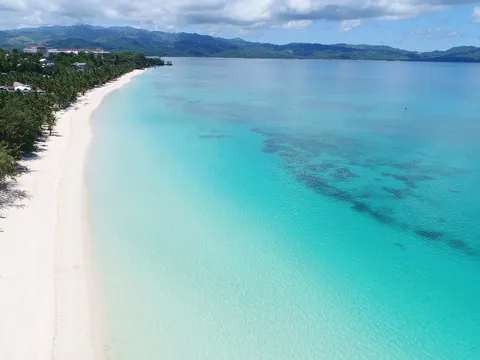
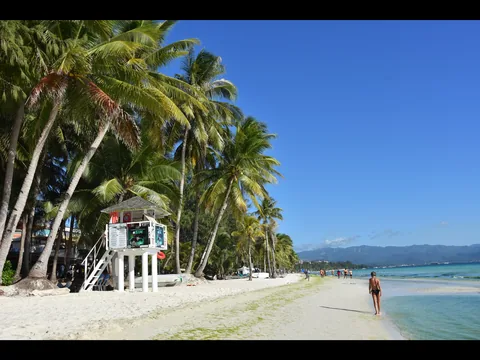
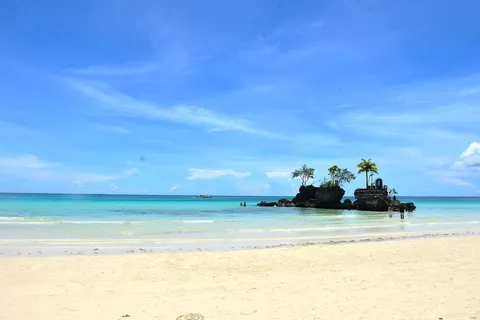
Boracay is a small island, seven kilometres long and in places barely one wide, and almost everything happens along one beach. White Beach runs four kilometres down the west coast: fine, powdery sand that stays cool underfoot, water that is shallow and clear for a long way out, and a sandy path behind it lined with hotels, restaurants, cafés, dive shops and massage huts. There are no cars on the beach and you will not need a taxi to get anywhere that matters. You walk.
The island closed for six months in 2018 for a clean up that replaced its sewage system and cleared the beachfront of illegal buildings, and it reopened with a cap on visitor numbers and rules that are actually enforced. Smoking and drinking on the beach itself are banned, and the rules are enforced. Japan was the third largest source of visitors to the Philippines in 2025, behind Korea and the United States, but on Boracay Japanese voices are still fairly rare, which many visitors count in its favour. English is spoken by everyone you will deal with, from the boat crew to the hotel front desk.
How to Get from Japan to Boracay
Is there a direct flight from Japan to Boracay? No, and there has not been one. The two airports near the island are Caticlan (airport code MPH), five minutes by road from the boat, and Kalibo (KLO), about 90 minutes away. Caticlan has no international flights at all, and the only international flights into Kalibo come from Korea. Royal Air Philippines, the airline people sometimes remember as the direct option, flew to Kalibo from China, Taiwan and Korea, never from Japan, and it stopped flying in January 2026. So every trip from Japan is two flights: one to a Philippine gateway, then a short domestic hop.
That sounds like more effort than it is. The international leg is about the same as Tokyo to Bangkok, the domestic leg is an hour, and on a well timed connection you leave Narita or Haneda in the morning and watch the sunset from White Beach the same day.
The Routes, Compared
| Route | Airlines from Japan | Time in the Air | Good to Know |
|---|---|---|---|
| Japan to Manila, then Manila to Caticlan | Philippine Airlines from Narita, Haneda, Kansai, Nagoya, Fukuoka and Sapporo. JAL and ANA from Narita and Haneda. Cebu Pacific from Narita, Kansai, Nagoya and Fukuoka. Jetstar Japan from Narita. Philippine Airlines, Cebu Pacific and AirAsia fly on to Caticlan many times a day. | About 4h 40m to 5h 20m from Tokyo, then 1h | The most choice of times and fares. You clear immigration in Manila and usually change terminal, so leave a proper gap between flights. |
| Japan to Cebu, then Cebu to Caticlan | Philippine Airlines from Narita and Kansai. Cebu Pacific from Narita. Cebu Pacific and Philippine Airlines fly on to Caticlan. | About 5h, then 1h | A smaller, calmer airport than Manila, and the easy way to add a few days of diving or Cebu resorts to the same trip. |
| Japan to Manila, then Manila to Kalibo | The same flights to Manila, then AirAsia or Cebu Pacific to Kalibo. | About 5h, then 1h 10m | Sometimes cheaper, but adds a 90 minute drive to the jetty. Worth it only when the fare difference is large or Caticlan is sold out. |
From Osaka the international flight is a little shorter than from Tokyo, and Kansai has both Manila and Cebu services, which makes it the most flexible departure point outside the capital. If you are deciding between Manila and Cebu, read our guides to the Manila to Boracay and Cebu to Boracay connections.
Changing Planes in Manila, Step by Step
Manila is where your trip enters the Philippines, so even on one ticket you cannot stay airside. The sequence is always the same:
- Immigration. Have your passport, the eTravel QR code and your return flight details ready. At busy times the queue can take 30 to 60 minutes.
- Collect your bags. Your suitcase comes off at Manila even if it was tagged through, and you take it through customs yourself.
- Move to the domestic terminal if you need to. As of mid 2026, JAL, ANA, Jetstar Japan and Cebu Pacific use Terminal 3, Philippine Airlines international flights use Terminal 1, and Philippine Airlines and AirAsia domestic flights leave from Terminal 2. Cebu Pacific to Cebu Pacific is the simple case: both flights are in Terminal 3. A free shuttle runs between terminals, but it shares the airport roads with Manila traffic, so allow 30 to 45 minutes.
- Check in again. Domestic counters close 45 minutes before departure, and they do close.
- Security and boarding for the one hour flight to Caticlan.
Leave at least three hours between flights on one ticket and four hours on separate tickets. Terminal assignments at Manila have changed several times since the airport was privatised in 2024, so check your terminal on the airline's own site a week before you fly. If the connection feels too tight, the Cebu route avoids all of this in a much smaller airport.
From Caticlan Airport to Your Hotel
The last part is short but has several steps: a five minute ride from the airport to the Caticlan jetty, a terminal fee and an environmental fee paid at separate windows, the boat ticket, a 10 to 15 minute crossing, and then a tricycle or van from the island's jetty to your hotel. None of it is difficult, but after an early start and a connection in Manila it is a lot of queues.
Let Someone Meet You at Caticlan
A prebooked transfer turns that last hour into one step. Your driver waits at the arrivals exit with your name on a sign, the fees and boat tickets are handled for you, and a van takes you from the island jetty to your hotel door. You pay one fixed price before you leave Japan, and if your Manila connection runs late the driver waits. The same service meets Kalibo flights if that is how your fare worked out.
Visa and Entry: 30 Days Visa Free
Japanese passport holders do not need a visa for a holiday in the Philippines. You are admitted for up to 30 days on arrival, with no fee. What immigration checks:
- A return or onward ticket that leaves the Philippines within your 30 days. Airlines in Japan check this at check in, so have the booking on your phone.
- Your passport. Japan is one of the countries allowed in with less than six months of validity remaining, as long as it covers your stay, but six months is the standard many airline counters expect, and renewing early saves an argument at Narita. Our Philippines entry requirements guide covers the details.
- eTravel registration. Every arriving passenger fills in the eTravel form at etravel.gov.ph, no earlier than 72 hours before arrival. It takes about five minutes, it is free, and it produces a QR code that immigration scans. Several look alike websites charge a fee for the same form; the official one never does.
If you want to stay longer than 30 days, you can extend at a Bureau of Immigration office in the Philippines, or apply for a tourist visa through the Philippine Embassy in Tokyo before you go.
When to Go: Japanese Holidays and Boracay's Seasons
Boracay has two seasons, named after the winds. From November to April the Amihan wind blows from the northeast: dry, sunny, calm seas on White Beach, and the best months of the year. From June to September the Habagat brings the southwest monsoon: rain showers, waves on White Beach, and days when boats and island hopping tours are cancelled. May and October are the turning points. Our Boracay weather guide goes month by month.
Lined up against the Japanese calendar:
- New Year (late December to early January). Peak season and perfect weather, and the island's busiest and most expensive period. Book flights and hotels by September or October.
- Spring break and late March. Excellent weather, and the end of the dry season is when the sea is at its calmest.
- Golden Week (29 April to 5 May 2027). Still dry season and very hot. In 2027 the holidays fall on Thursday 29 April and Monday 3 to Wednesday 5 May, so taking Friday 30 April off gives you seven days, enough for 5 nights on the island. 1 May is a public holiday in the Philippines too, so the island is busy; book early.
- Obon (mid August). The middle of the wet season. You will still get sunny hours most days and prices are at their lowest, but plan for some rain and at least one day when the boats stay in.
- Silver Week. Late September, also wet season, and there is no long Silver Week in 2027.
How Many Nights? 3 Nights 4 Days or 4 Nights 5 Days
Because every route from Japan includes a connection, the first and last days are mostly travel. On 3 nights 4 days you get two full days on the island: enough for one hopping tour, one afternoon of water sports and two sunsets, and the trip will feel short. 4 nights 5 days gives you three full days and is what we recommend for a first visit. With 5 nights or more you can add a day trip to Ariel's Point, a kitesurfing lesson, or simply days where you do nothing at all, which is what Boracay is best at.
A 4 Nights 5 Days Plan
Fly, Connect, First Sunset
A morning departure from Tokyo or Osaka, the connection in Manila or Cebu, and Caticlan in the afternoon. Check in, change, and walk down to the beach for the sunset with a mango shake. Dinner at D'Mall, which is ten minutes on foot from most of Station 2.
Island Hopping
The day almost every visitor spends on a bangka, the traditional outrigger boat: snorkelling over the reef, Crystal Cove, cliff jumping at Magic Island if you want it, lunch grilled on board, and Puka Beach in the afternoon. ₱1,000 to ₱1,800 per person (about ¥2,500 to ¥4,500). Back for sunset sailing on a paraw, the small sailing boats that line up off White Beach every evening.
Water Sports and Seafood
Parasailing in the morning, when the sea is calmest, or helmet diving if someone in the group does not swim. In the afternoon, an ATV ride up Mount Luho for the view over both coasts. Dinner at D'Talipapa, the wet market where you choose your fish and prawns on ice and a restaurant next door cooks them for a small fee.
A Day with No Plans
Sleep late, swim, read under a palm tree, and book an hour of massage on the sand in the afternoon. If you are restless, walk the length of White Beach from Station 3 to Station 1, about an hour, or take a tricycle to Puka Beach. Final dinner on the sand at a Station 1 beachfront restaurant.
Home
Breakfast on the beach, then the boat, Caticlan, and your connection home. Allow plenty of time for the jetty and the check in at Caticlan, and remember that you clear departure immigration at Manila or Cebu, not on the island.
Where to Stay: Station 1, 2 or 3
White Beach is divided into three stretches named after old boat stations, and choosing between them matters more than choosing a hotel.
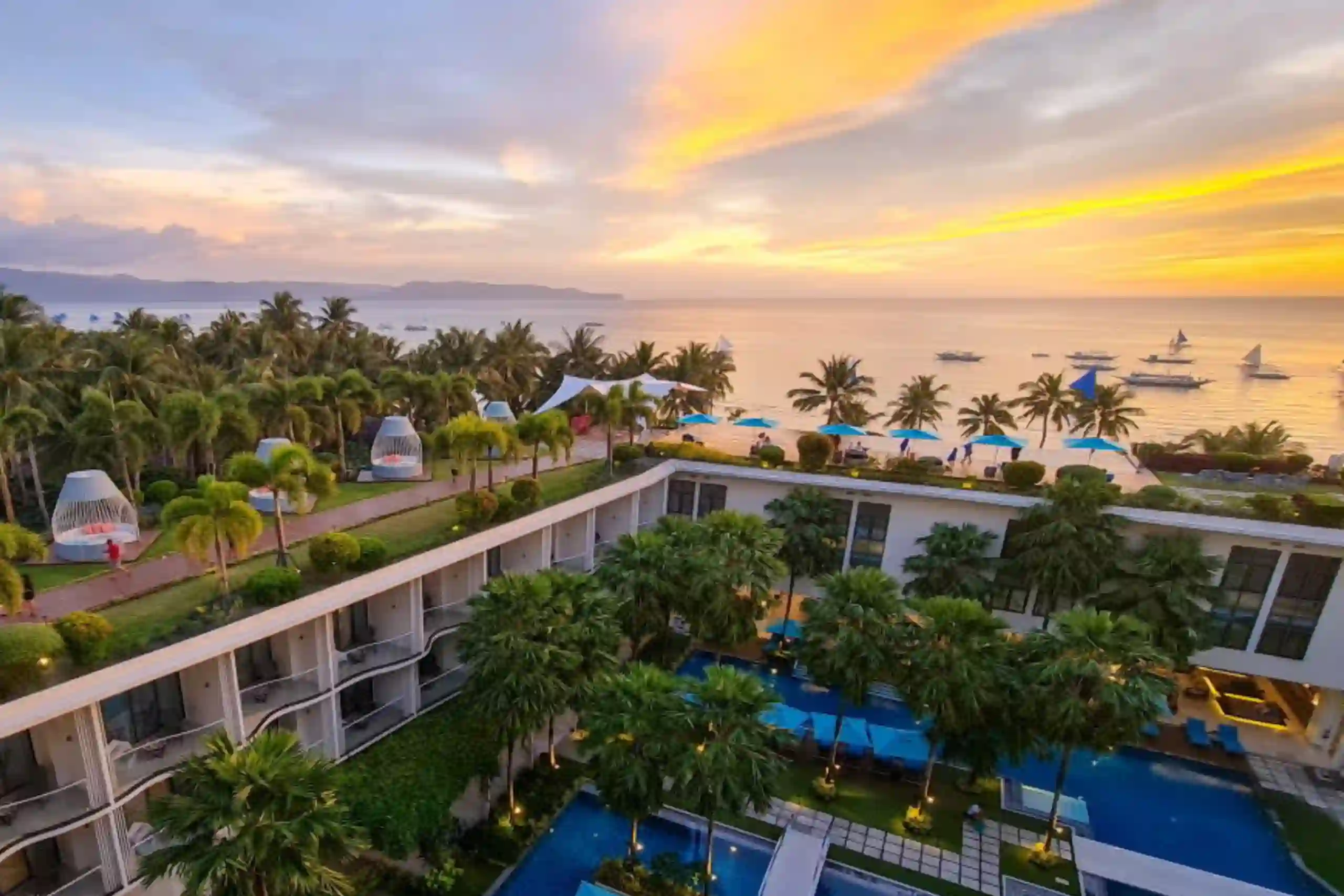
Station 1: The Widest Sand and the Best Resorts
₱8,500-26,000 / night (about ¥21,000-65,000)
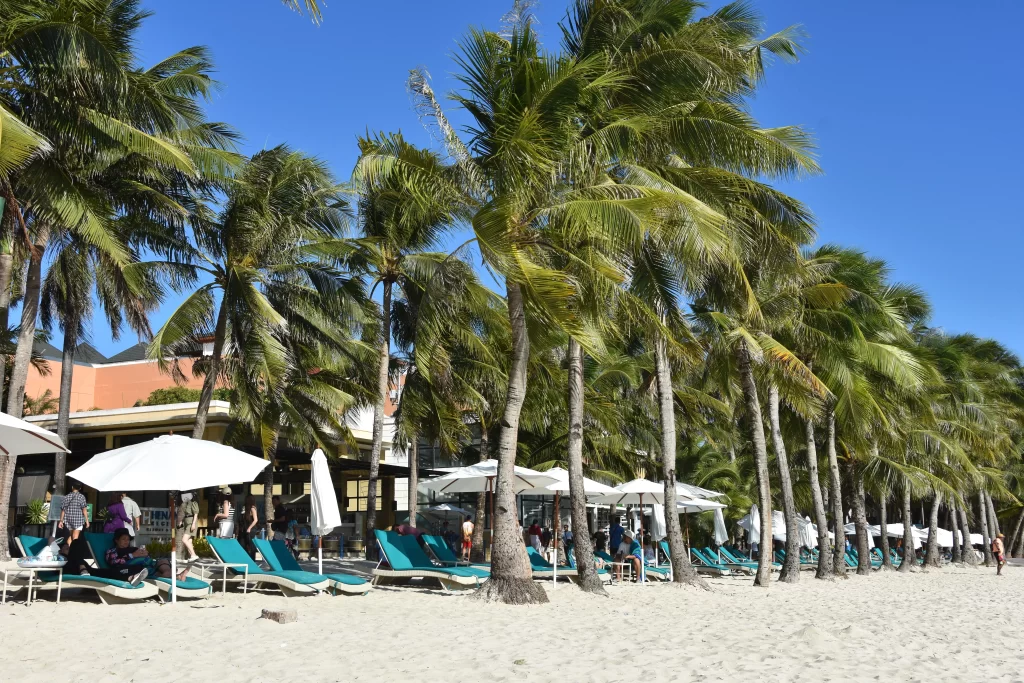
The north end of White Beach has the widest sand, the fewest crowds and the island's best known resorts, including The Lind, Discovery Shores and Henann. The Shangri La and Mövenpick sit on their own coves a little further north. The right choice for a honeymoon or for families with small children.
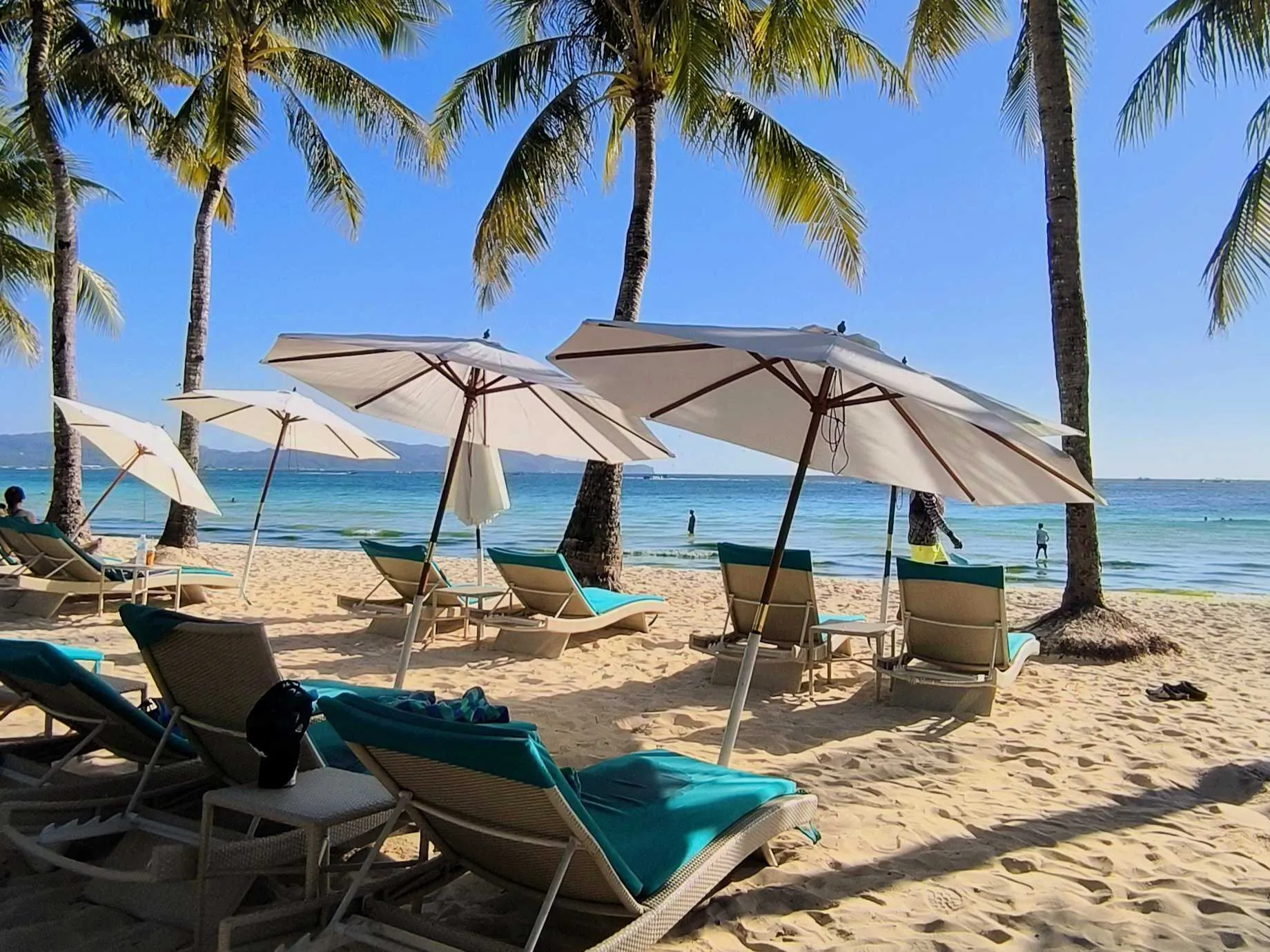
Station 2: The Centre of Everything
₱3,000-10,500 / night (about ¥7,500-26,000)
D'Mall, D'Talipapa, most of the restaurants and bars, the tour desks and the convenience stores are all here. The busiest stretch of beach, and the most convenient base for a first visit, especially if you want to walk everywhere.
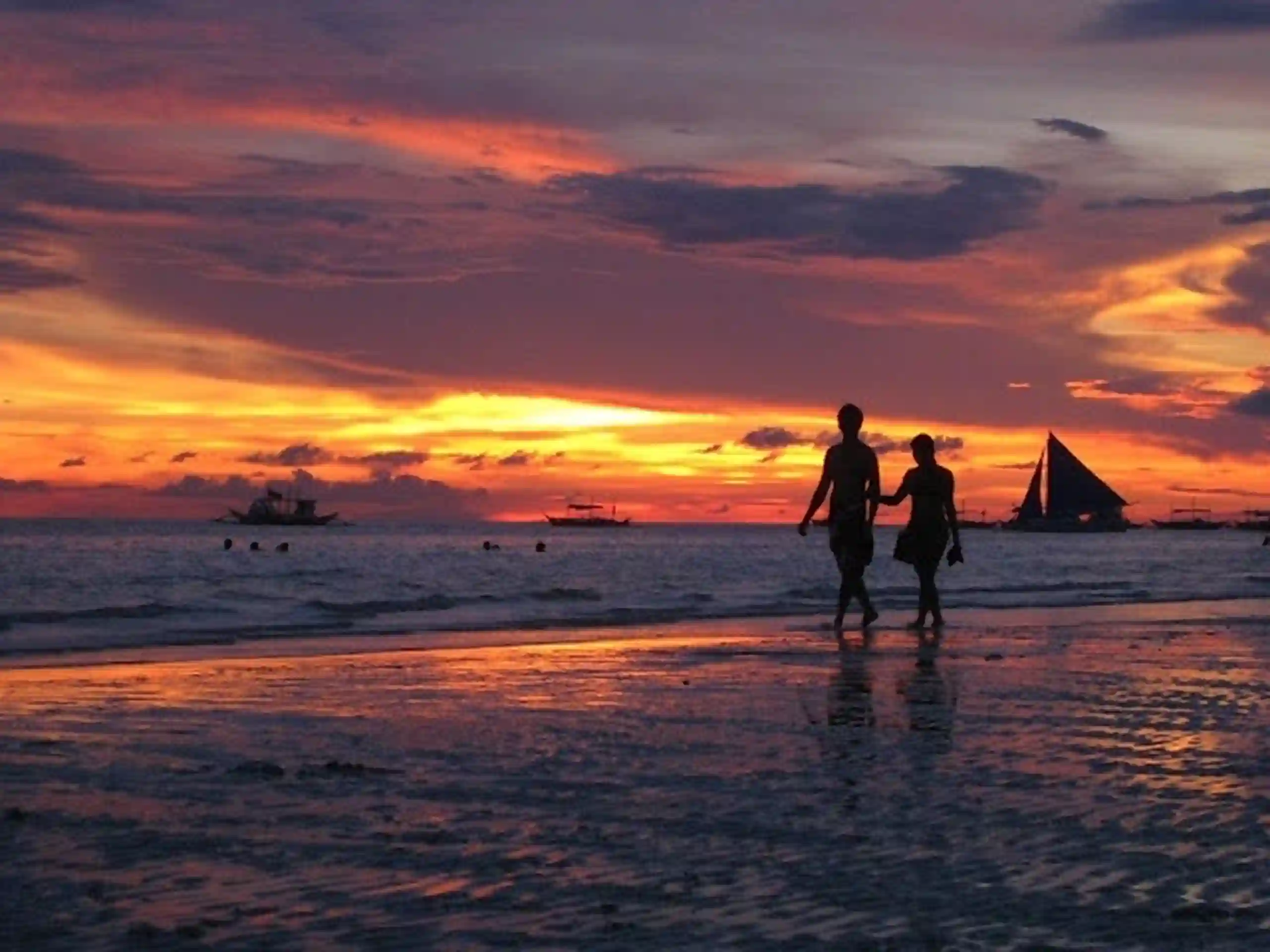
Station 3: Quiet and Good Value
₱1,000-4,500 / night (about ¥2,500-11,000)
The southern end is calmer and cheaper, with smaller hotels and local restaurants, and D'Mall is a 15 minute walk along the sand. A good base for a longer stay or a tighter budget.
Things to Do: What to Book
Most activities can be booked the day before, but in the New Year period and Golden Week the popular ones sell out. These are the ones worth planning around, with prices per person.
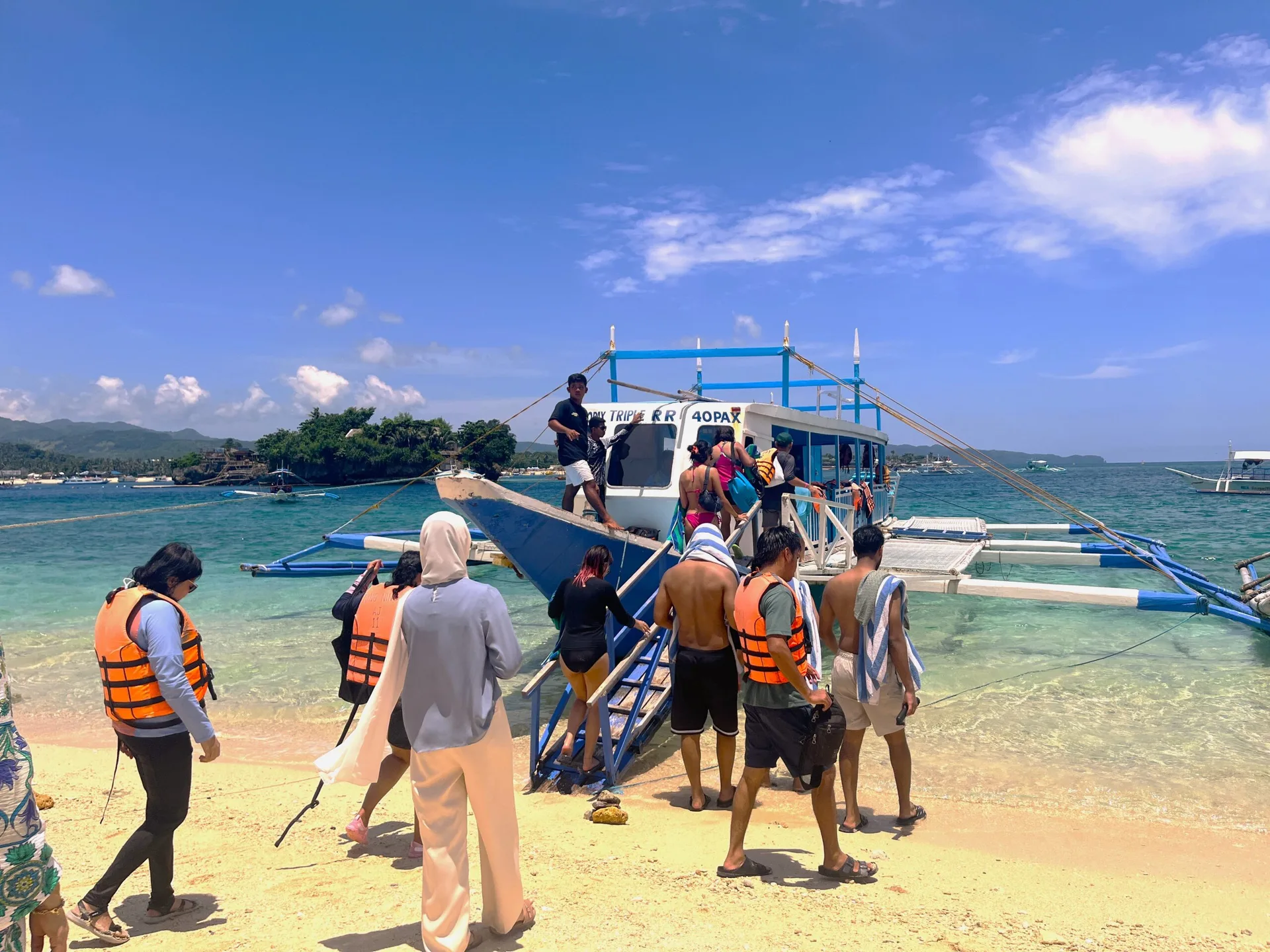 ₱1,000-1,800 (¥2,500-4,500)
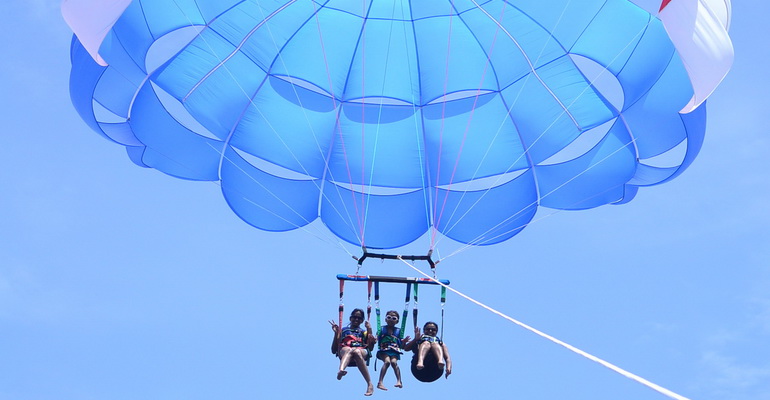 ₱1,200-1,700 (¥3,000-4,300)
 ₱1,050-1,500 (¥2,600-3,800)
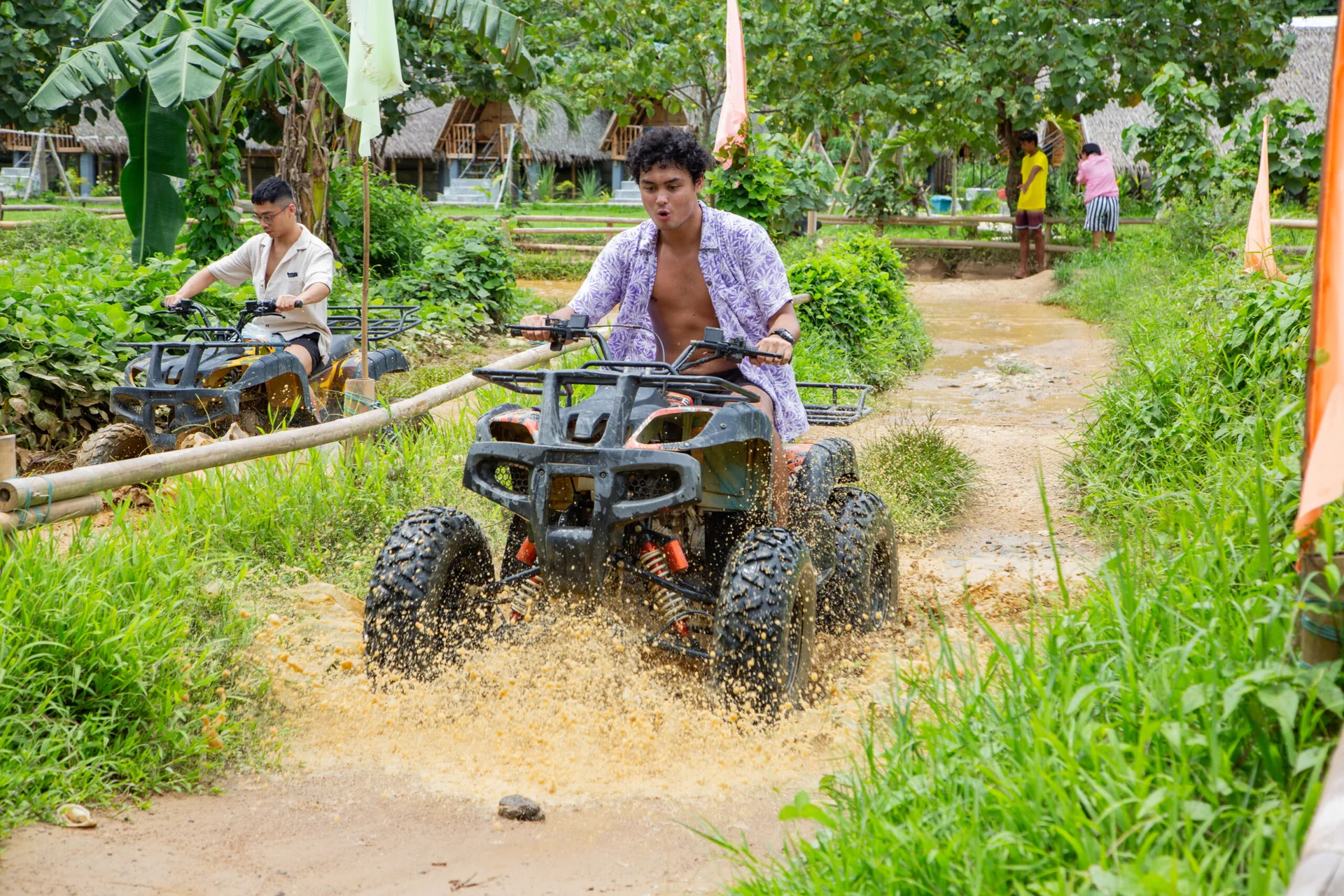 ₱1,050-1,500 (¥2,600-3,800)
 ₱700-1,050 (¥1,800-2,600)
 ₱600-1,200 (¥1,500-3,000)
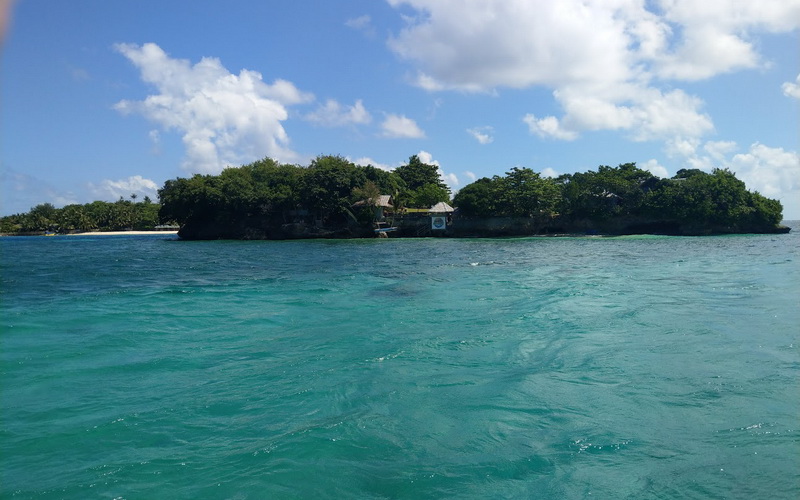 ₱2,100 (¥5,300)
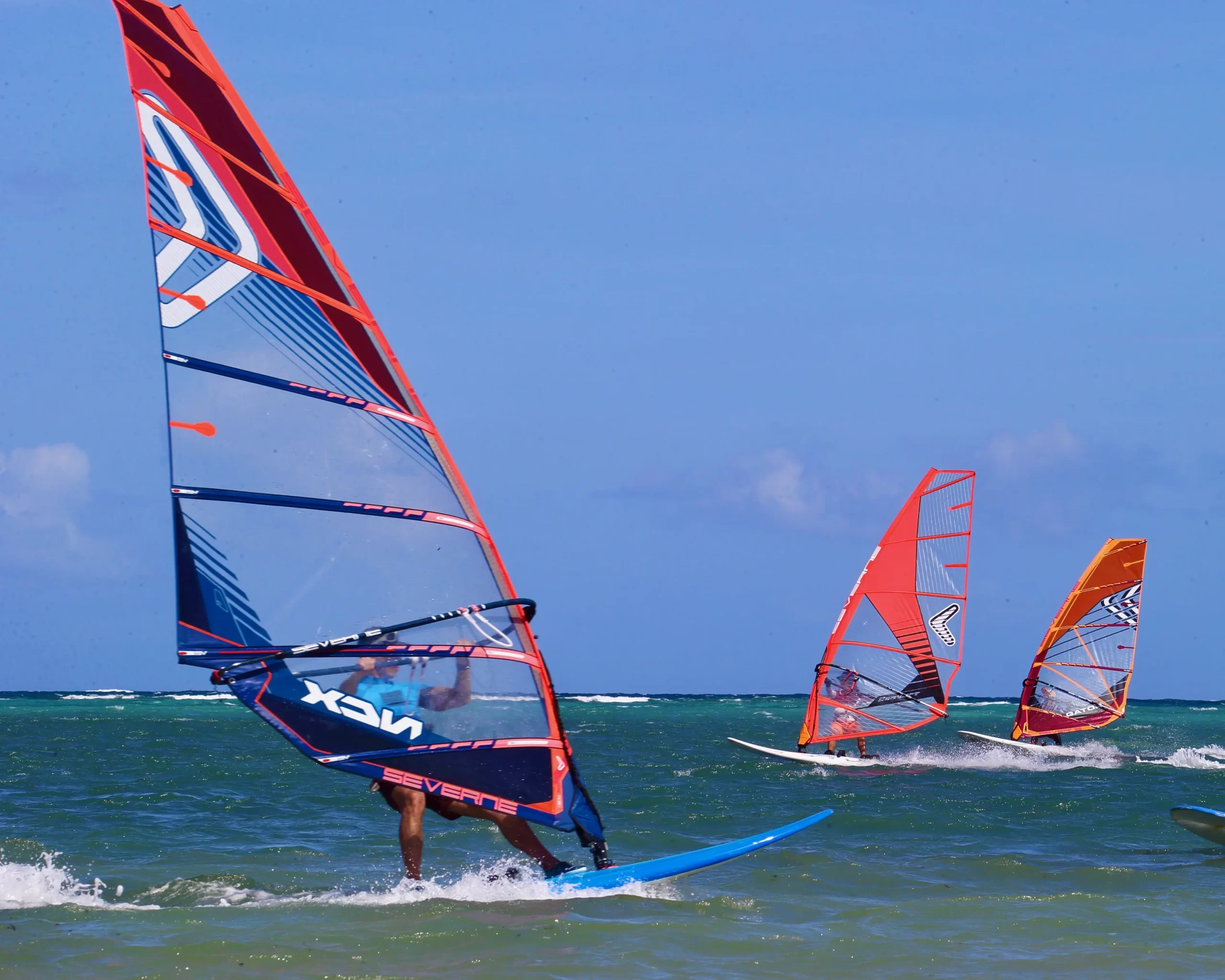 ₱4,200+ (¥10,500+)
Money: Yen, Pesos and What Things Cost
The currency is the Philippine peso. In October 2026, ¥10,000 is worth about ₱3,960, so a quick way to think is that ₱1,000 is about ¥2,500. A few things worth knowing:
- Change some money before the island. Exchange counters at Manila and Cebu airports and most money changers at D'Mall take yen. Rates on the island are fine, but bring clean, undamaged notes.
- Cards. Hotels, larger restaurants and tour operators take Visa and Mastercard. Smaller places, tricycles, the jetty fees and the market are cash only. If your main card is JCB, bring a Visa or Mastercard as well, because fewer places in the Philippines take JCB.
- ATMs. There are ATMs at D'Mall and along the main road. Each withdrawal with a foreign card costs around ₱250 on top of your own bank's fee, so take out larger amounts less often. If the machine offers to charge you in yen, decline: the conversion it offers is worse than your bank's.
- Tipping. Not expected, but a service charge is often already on the bill, and ₱50 to ₱100 for a good guide or boat crew is appreciated.
A realistic daily budget per person, not counting flights:
| Style | Hotel | Food | Activities | Getting Around | Per Day |
|---|---|---|---|---|---|
| Budget | ₱1,000-2,000 | ₱500-900 | ₱700 | ₱150 | ₱2,400-3,800 (¥6,000-9,500) |
| Mid Range | ₱3,500-7,000 | ₱1,200-1,800 | ₱1,400 | ₱250 | ₱6,400-10,400 (¥16,000-26,000) |
| Premium | ₱8,500-17,000 | ₱2,600-3,500 | ₱2,500 | ₱500 | ₱14,000-23,500 (¥35,000-59,000) |
| Luxury | ₱21,000+ | ₱5,000+ | ₱4,000 | ₱900 | ₱31,000+ (¥78,000+) |
Hotel prices are per room, so a couple sharing pays half of that column each. Add the terminal and environmental fees at the Caticlan jetty, a few hundred pesos per person each way, paid in cash unless your transfer includes them. Flights from Japan vary more than anything else on this page: seat sales on Cebu Pacific and Philippine Airlines can bring the round trip down to a fraction of the full service fare, and New Year and Golden Week fares are the highest of the year.
Safety and Things to Watch Out For
Boracay is a safe island by the standards of any beach destination in Asia. Violent crime against visitors is very rare, the beach path is busy and well lit until late, and there is a tourist police presence along White Beach. The things that actually go wrong on a Boracay holiday are smaller:
- Bags left on the sand. Petty theft happens, as it does on any busy beach. Leave passports in the hotel safe and do not leave a phone on a towel while you swim.
- Prices agreed afterwards. For a tour bought from someone on the beach, or a tricycle ride, agree the price before you go. Fixed price bookings avoid the question entirely.
- The beach rules. Smoking and drinking alcohol on the sand are banned and fined. Bars on the beach path serve drinks at their own tables.
- The sun. Boracay is 12 degrees north of the equator. The midday sun is much stronger than a Japanese summer; wear high factor sunscreen, a rash guard for the boat day, and drink bottled water rather than tap water.
- Wet season seas. From June to September, boat trips are cancelled when the sea is rough. Do not plan the hopping tour for your last day, so there is a spare day if it is called off.
- Green algae. At certain times of year, usually in the first half, a fine green algae washes up along parts of White Beach for a few weeks. It is natural, harmless and cleared every morning, and it is the reason for most of the "Boracay is dirty" reviews you may have read. The water itself is clean.
In an emergency, the main hospitals are on the island and the larger ones are in Kalibo. The Japanese diplomatic office responsible for Boracay is the Consulate General of Japan in Cebu (+63 32 231 7321), which covers the whole of Western Visayas. Register your trip with the Ministry of Foreign Affairs Tabireg service before you go and you will receive its safety notices by email.
Eating in Boracay
The food worth flying for is local, and above all the seafood. At D'Talipapa you choose fish, prawns, crab and scallops from the ice, pay by weight, and take them to one of the restaurants next door, which cook them grilled, with garlic butter or in sweet and sour sauce for a small fee per kilo. Try the Filipino classics too: adobo, meat braised in soy and vinegar; sinigang, a sour tamarind soup; sisig, chopped grilled pork served sizzling on a hot plate; and halo halo, shaved ice with sweet beans, jelly and purple yam ice cream. A mango shake at Jonah's on Station 1 is a rite of passage.
If you want Japanese food on night four, HAMA at D'Mall has served sushi, sashimi and teishoku sets since 2007. Expect ₱300 to ₱600 (¥750 to ¥1,500) for a filling local meal with a drink, and ₱2,500 to ₱4,000 (¥6,300 to ¥10,000) for a beachfront dinner for two with wine. Our Boracay food guide lists the places worth the walk.
Practical Details for Japanese Travellers
Time difference. The Philippines is one hour behind Japan, all year.
Power. 220 volts, against 100 volts in Japan. The sockets usually take Japanese flat two pin plugs, so phone and laptop chargers, which are almost all rated 100 to 240 volts, work without an adapter. Check the label: a hair dryer or curling iron made only for 100 volts will burn out without a transformer.
Mobile data. Buy a Globe or Smart prepaid SIM at Manila, Cebu or Caticlan airport for ₱300 to ₱600 with 10 to 25 GB, or set up an eSIM before you leave Japan. Japanese roaming plans work but cost much more for a whole trip. Hotels and tour operators here use WhatsApp and Facebook Messenger rather than LINE. Our Philippine SIM card guide compares the options.
Language. English everywhere: menus, signs, boat schedules and every conversation you will have. Japanese is rarely spoken, but staff are patient and used to guests for whom English is a second language.
Getting around. On foot along the beach path, or by tricycle and electric tricycle on the main road behind it. A short shared ride is ₱20 to ₱50 per person, ₱100 to ₱200 to hire the whole tricycle. There is no Grab on the island and no need to rent anything.
Toilets and water. Hotel bathrooms are Western style. Do not drink the tap water; bottled water is sold everywhere, and many hotels provide refills.
Boracay, Cebu or Okinawa?
Japanese travellers planning a short beach holiday usually weigh these three, and they suit different trips.
Choose Boracay for the beach itself. White Beach is the finest stretch of sand of the three, the whole island is walkable, and the evening routine of sunset, sailing boats and dinner on the sand is the reason people come back. The cost is one connection on the way there.
Choose Cebu for a direct flight and more variety: big resorts on Mactan Island, diving at Moalboal, waterfalls and day trips. Its own beaches are not in Boracay's league, but it combines well with Boracay on a longer trip, since Cebu to Caticlan is a one hour flight.
Choose Okinawa when you cannot take more than two or three days, or do not want to travel abroad: no passport, no currency change, short flights. Okinawa's beaches are beautiful, but the swimming season is shorter, the typhoons arrive in the same months, and a week in a beach hotel costs considerably more than on Boracay.
If you have more than a week, Cebu plus Boracay on one ticket is the best combination in the Philippines.
Frequently Asked Questions
Is there a direct flight from Japan to Boracay?
No. No airline flies nonstop from Japan to Caticlan or Kalibo, the two airports near Boracay. You fly to Manila or Cebu first and connect to a one hour domestic flight to Caticlan, which is ten minutes from the boat to the island.
How long does it take to get from Tokyo to Boracay?
About 4 hours 40 minutes to 5 hours 20 minutes from Tokyo to Manila, a connection of at least three hours, an hour to Caticlan, and about 45 minutes from the airport to your hotel by road, boat and road. Plan on 10 to 12 hours door to door; with a morning departure you arrive the same afternoon or evening.
Do Japanese citizens need a visa for the Philippines?
No. Japanese passport holders are admitted visa free for up to 30 days. You need a return or onward ticket and the free eTravel registration, completed within 72 hours before arrival at etravel.gov.ph.
How many nights should I stay in Boracay?
4 nights 5 days for a first visit. Because the first and last days are mostly travel, 3 nights 4 days leaves only two full days on the island, which is enough to see it but feels rushed.
Is Boracay good for Golden Week?
Yes. Golden Week falls at the end of the dry season, with hot sunny days and calm seas. It is busy, because Filipino families travel at the same time, so book flights and hotels two or three months ahead.
Is Boracay safe?
Yes. Serious crime against visitors is rare and the beach path is busy until late. Watch your belongings on the sand, agree prices before tours and tricycle rides, respect the ban on drinking and smoking on the beach, and take the sun seriously.
Is it better to fly to Caticlan or Kalibo?
Caticlan, if the fare is reasonable. It is five minutes from the jetty, while Kalibo is a 90 minute drive. Kalibo makes sense only when the flight is much cheaper or Caticlan is full.
Can I use yen in Boracay?
Not for paying, but yen are easy to exchange at Manila or Cebu airport and at D'Mall on the island. ¥10,000 is about ₱4,000. Bring a Visa or Mastercard as well as cash, since JCB is accepted in fewer places.
Do Japanese chargers and plugs work in Boracay?
Usually, yes. Most sockets take the flat two pin plug used in Japan, and phone and laptop chargers handle 100 to 240 volts. The supply is 220 volts, so devices made only for 100 volts, such as many hair dryers, need a transformer.
Is there Japanese food in Boracay?
Yes. HAMA at D'Mall, in the middle of White Beach, has served Japanese food since 2007.
Where is the nearest Japanese consulate to Boracay?
The Consulate General of Japan in Cebu covers Boracay and the rest of Western Visayas. Its number is +63 32 231 7321. The Embassy of Japan is in Manila.
Ready to Plan Your Boracay Trip?
Pick a flight to Manila or Cebu with a comfortable connection to Caticlan, fill in the eTravel form in the three days before you fly, bring yen to change and a Visa or Mastercard, and choose Station 2 for a first visit. Prebook the Caticlan transfer and your first afternoon on the island starts at the beach instead of in a queue. If you have questions about hotels, activities or transfers, message us on WhatsApp at +63 950 316 6415 and we will help you plan a trip that fits your dates and budget.